


Accessibility Compliance for EU Digital Regulations
Trusted by organizations who believe in access for all:




EU accessibility law is not optional.
Public sector
Web Accessibility Directive (WAD) – enforced from September 2020.
Private sector
European Accessibility Act (EAA) – enforced from June 2025.
Non-compliance means legal exposure, procurement disqualification, and excluded users. We close that gap — with technical audits, a platform to manage ongoing compliance, and consulting to build accessibility into how you work.
Is your website or app compliant?
Answer a few questions. Get an instant read on where you stand against EU accessibility laws.
Everything you need to comply — in three steps
Three accessibility services. One outcome: your organization is compliant, and stays compliant.
.png)
Accessibility Audits & Remediation
Built for:
What's included:
- Full evaluation: screen reader testing (NVDA, VoiceOver, TalkBack), keyboard navigation, visual and structural checks
- Testing by IAAP-certified specialists (WAS, CPACC), trained across every disability category
- Findings delivered in-platform: categorized, filterable, with a clear issue description and an actionable fix for each
- Delivery meeting to walk through the platform and findings
- 1-hour consultation on remediation
- Hands-on remediation available separately — HTML, CSS, JS, WordPress, Webflow, and e-documents.
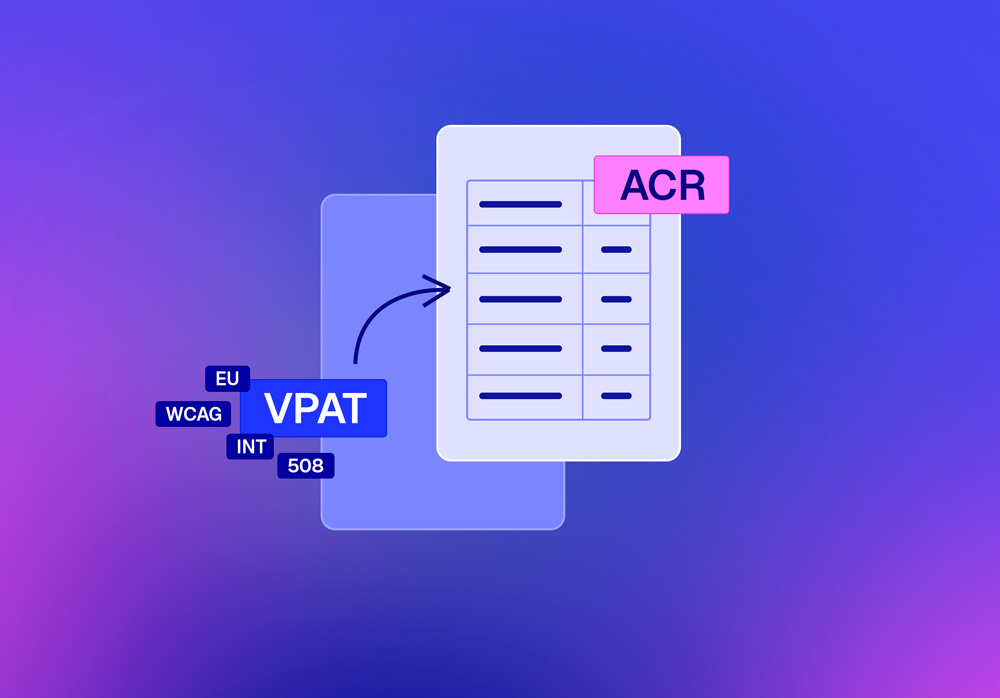
- Optional: Accessibility Conformance Report (ACR) and Accessibility Statement
.png)
Accessibility Compliance Platform
Built for:
What's included:
- Compliance requirement matrix, so you see what applies before you're asked by Market Surveillance Authorities
- Full issue workspace per property — issues, status, assigning to team members, disputes, remediation notes
- Hosted ACR status page, continuously updated, at your own subdomain
- Inspection- and tender-ready at any moment, not just at audit time
- Shared knowledge library — every team learns from every other team's fixes
- Yearly regression check included, so compliance doesn't quietly drift between audits.
.png)
Accessibility Consultancy
Built for:
What's included:
- Compliance and remediation strategy, tailored to your organization
- Technical guidance on fixing issues your teams can actually implement
- Team trainings and workshops — design, development, content
- Technical guides and playbooks your team keeps using after we leave
- Direct access to specialists when questions come up.
Working with EN 301 549
Read our insights on EN 301 549
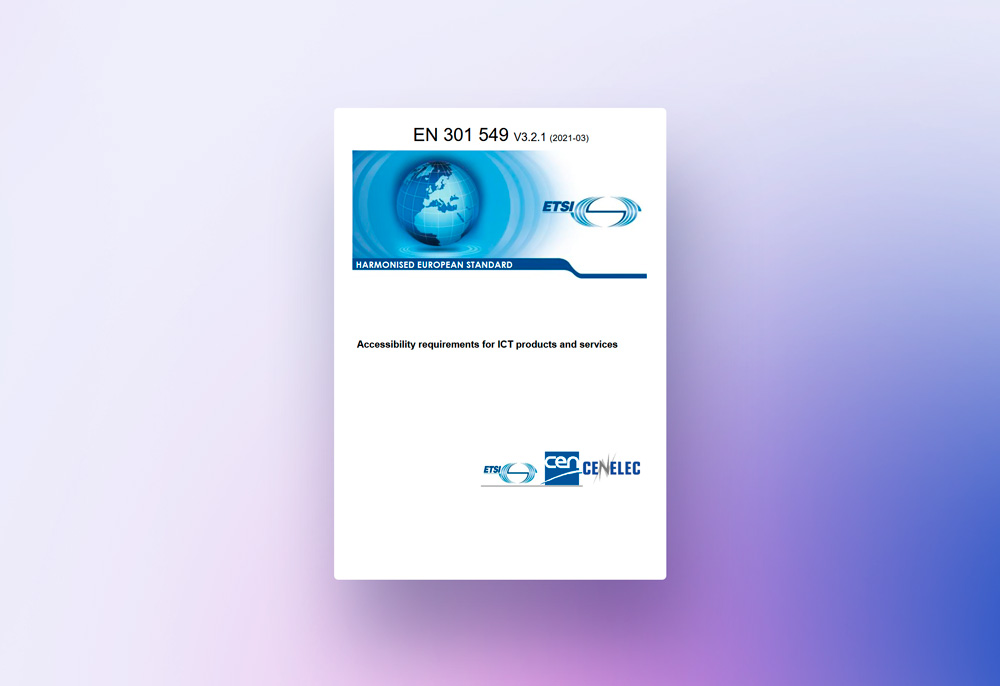

We test web, mobile apps, non-web documents, software
and we scope new formats as they come up, since EN 301 549 covers ICT broadly.
Legal accessibility standard
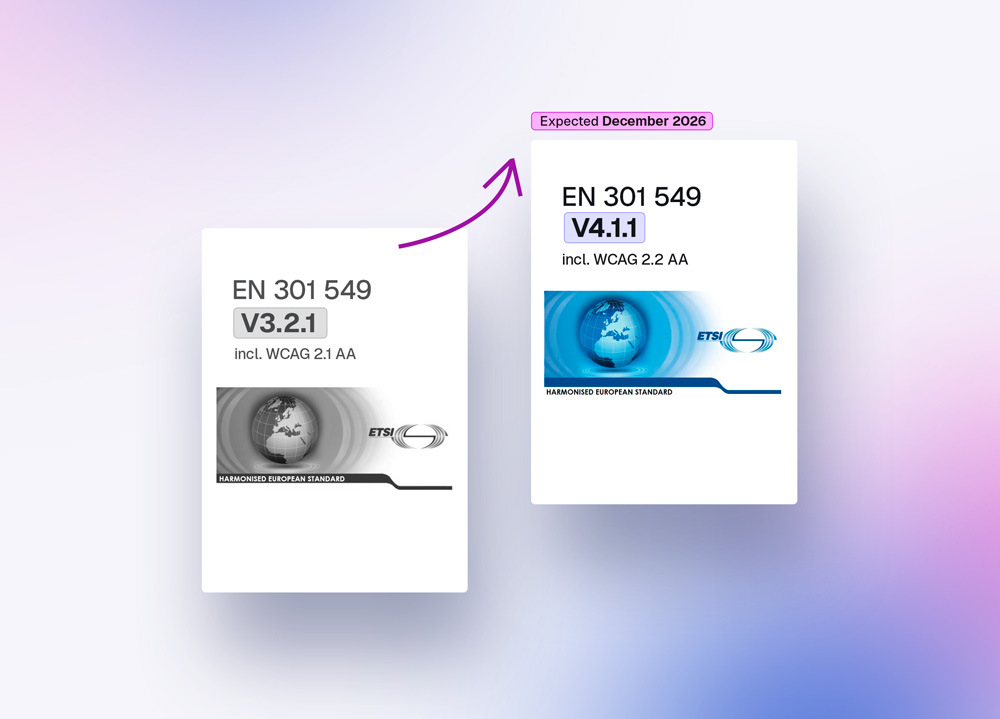
EN 301 549 standard is referenced by both the European Accessibility Act and the Web Accessibility Directive.
Most testing stops at WCAG. We go further: full EN 301 549 — the Harmonised European Standard, Accessibility requirements for ICT (Information and Communications Technology) products and services — on every audit.
Newsletter subscription
Twice a month we send insights, event updates, and valuable resources on best accessibility practices in Lithuania, the Baltics, and the EU market. Subscribe to get the latest knowledge and stay informed.


Our story
From building products to making them work for everyone
AxAll began over a decade ago as a design & development agency — building brands, websites, and digital experiences, long before accessibility was the focus. That changed when we learned how much of what we'd built worked for some people and not others.
So we studied. And because we'd spent a decade building, our work today goes beyond finding problems that fail people with disabilities: we understand the systems producing them, and we know what it takes to change them. Not just the fix itself, but the planning, the sequencing, and the follow-through as the product keeps changing — across a single evaluation or an entire portfolio.
We bring that to private and public sector organizations across Europe, helping them meet EU accessibility law and the EN 301 549 standard behind it. Every requirement exists because someone couldn't get through. That's who we're doing this for.

Indre Karlove

Vita June

Lina Balciunaite
UX & Accessibility Engineer | IAAP-Certified Accessibility Professional (CPACC)

Andzejus Ravanas
LASS Partner | Digital Accessibility Specialist | Expert in Screen Reader and Blind User Experience
Partners
We work with accessibility specialists at the Lithuanian Union of the Blind and Partially Sighted (LASS) on every relevant evaluation.

Book a consultation
Get in touch to schedule a call
Send us an email
letstalk@axall.digitalLet’s connect
LinkedinFAQ

If you provide e-commerce, banking, transport, e-books, or electronic communications services to EU consumers, yes, since June 2025 — with a narrow exemption for microenterprises on the services side. Scope depends on your specific service and where you operate; get in touch if you're unsure where you sit.
An audit is a one-time evaluation. The Platform is what keeps you compliant after: status tracking and assignment per issue, a compliance requirement matrix, and a hosted ACR that updates as fixes are verified — instead of managing it in spreadsheets across teams.
If you need ongoing strategic and technical guidance, team training, or help embedding accessibility into daily operations — yes. An audit is a point-in-time evaluation, not ongoing support.
Depends on scope, complexity, and whether you need full ACR documentation. We scope every engagement individually — get in touch with your platform details for a proposal.
Most of our work is with platforms already in production. Evaluation, remediation, ongoing tracking — bringing something into compliance doesn't require starting over.
Under Article 13(4) of the EAA, you're required to take corrective action and notify the relevant national authority, with details of the non-compliance and what you did about it. That's not a hypothetical — it's the actual legal process if a complaint or audit surfaces an issue. Having remediation already tracked and verifiable makes that process considerably less exposed.
No. Overlays sit on top of a site without fixing the underlying code, and the EAA and WAD require the underlying product to be accessible — not a layer bolted on. They can also introduce new problems for assistive technology users.
Yes. Our quality seals confirm a platform was assessed by us and met the criteria evaluated — a verifiable record of the work and what it found. Worth noting: no official certifying body exists for WCAG or EN 301 549, so this isn't a third-party accreditation — it's ours, backed by the evaluation behind it.