


Accessibility services
Accessibility audits and remediation
Our specialists evaluate your websites, apps, and documents against EN 301 549 and WCAG, then deliver what you choose: a report, an ACR, an accessibility statement, or hands-on fixes.
Trusted by organisations who believe in access for all:





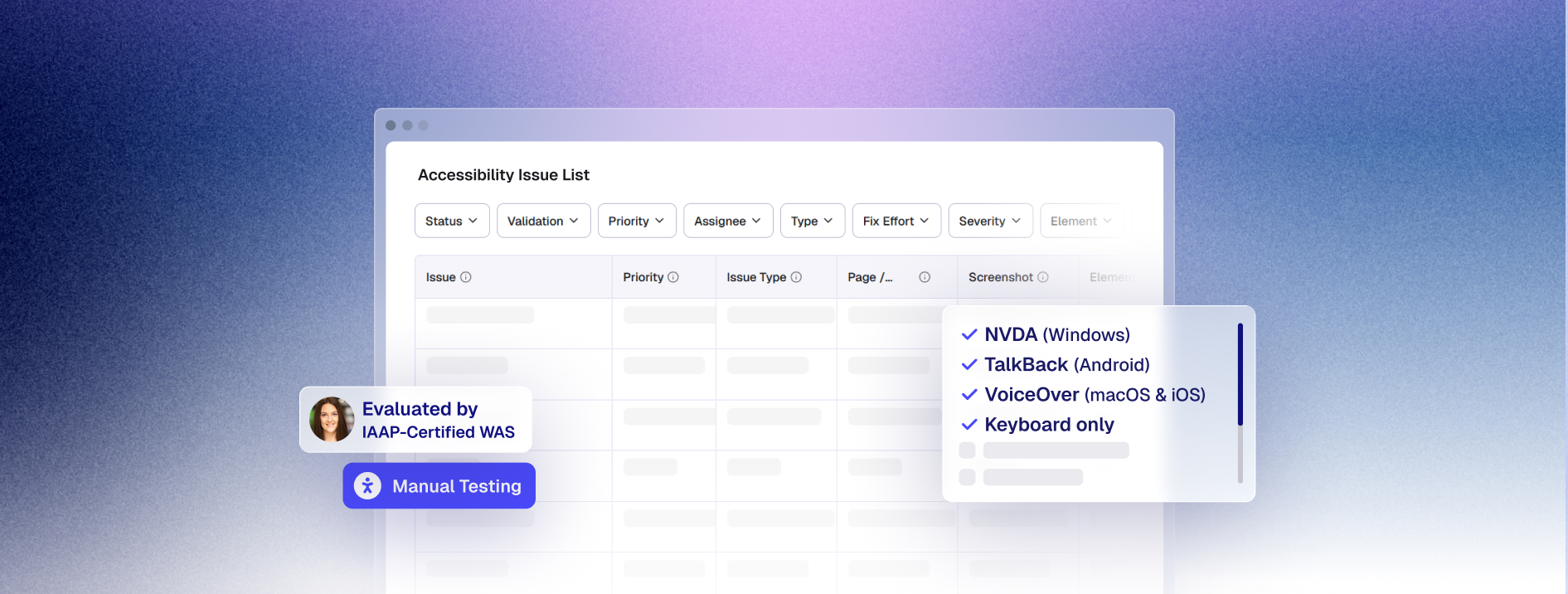
Every audit starts with a manual evaluation by accessibility specialists
Scoped to what you need
Evaluation comes first. Then choose any combination of the options below.
Accessibility evaluation report
For developers, designers, and content editors planning their own fixes ahead of a launch or redesign.
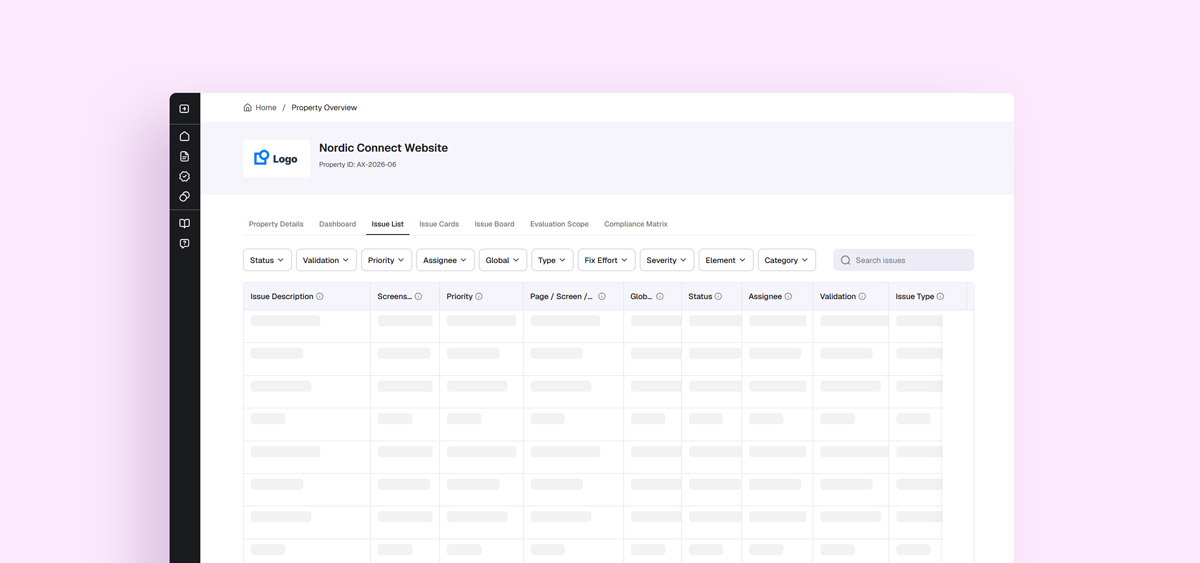
- Every finding mapped to the specific EN 301 549 requirement or WCAG success criterion it fails
- Categorised for filtering by severity, priority, fix effort, issue type, and component, so the right team (code, content, or design) owns each issue
- Fix recommendations and a screenshot showing where each issue occurs
- Written so developers, designers, and content editors can act on it directly

Accessibility Conformance Report (ACR)
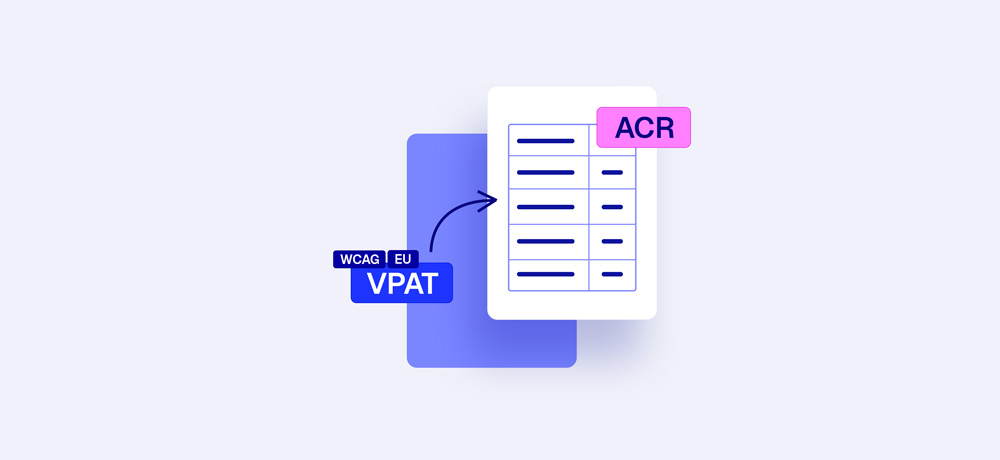
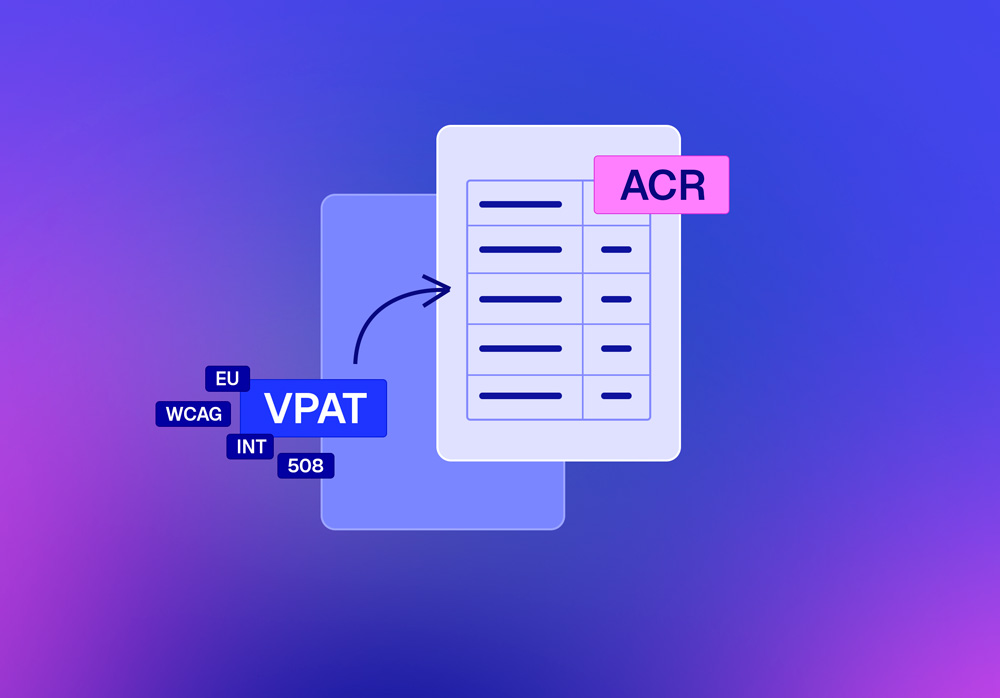
- Problems found and described directly in VPAT/ACR language
- Criterion-by-criterion conformance rating: Supports, Partially Supports, Does Not Support, Not Applicable, Not Evaluated
- Delivered as a single, ready-to-share document.
Accessibility statement
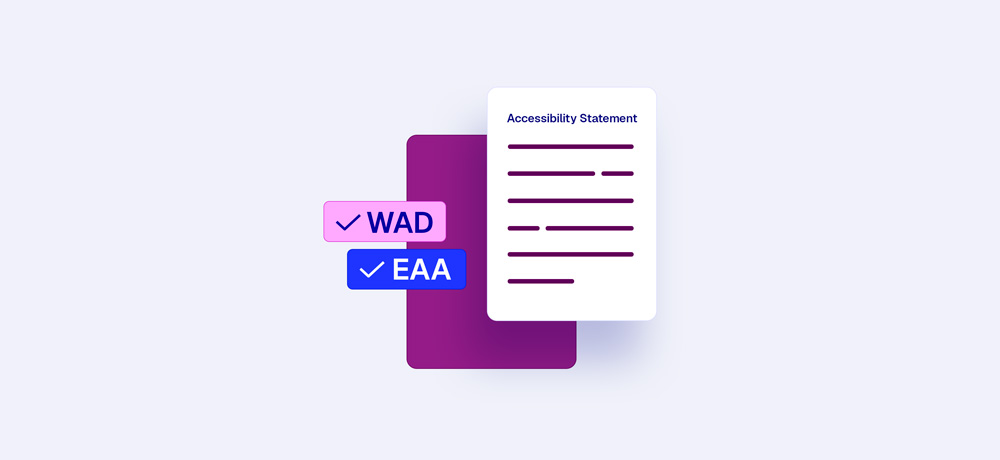
- Compliance status and non-accessible content described in plain language
- Your existing feedback channel documented in the statement (mandatory or standard practice, depending on your sector)
- Follows the WAD model format for the public sector, or the EAA’s Annex V information requirements for the private sector
Hands-on remediation
For teams without the in-house bandwidth to implement fixes themselves.
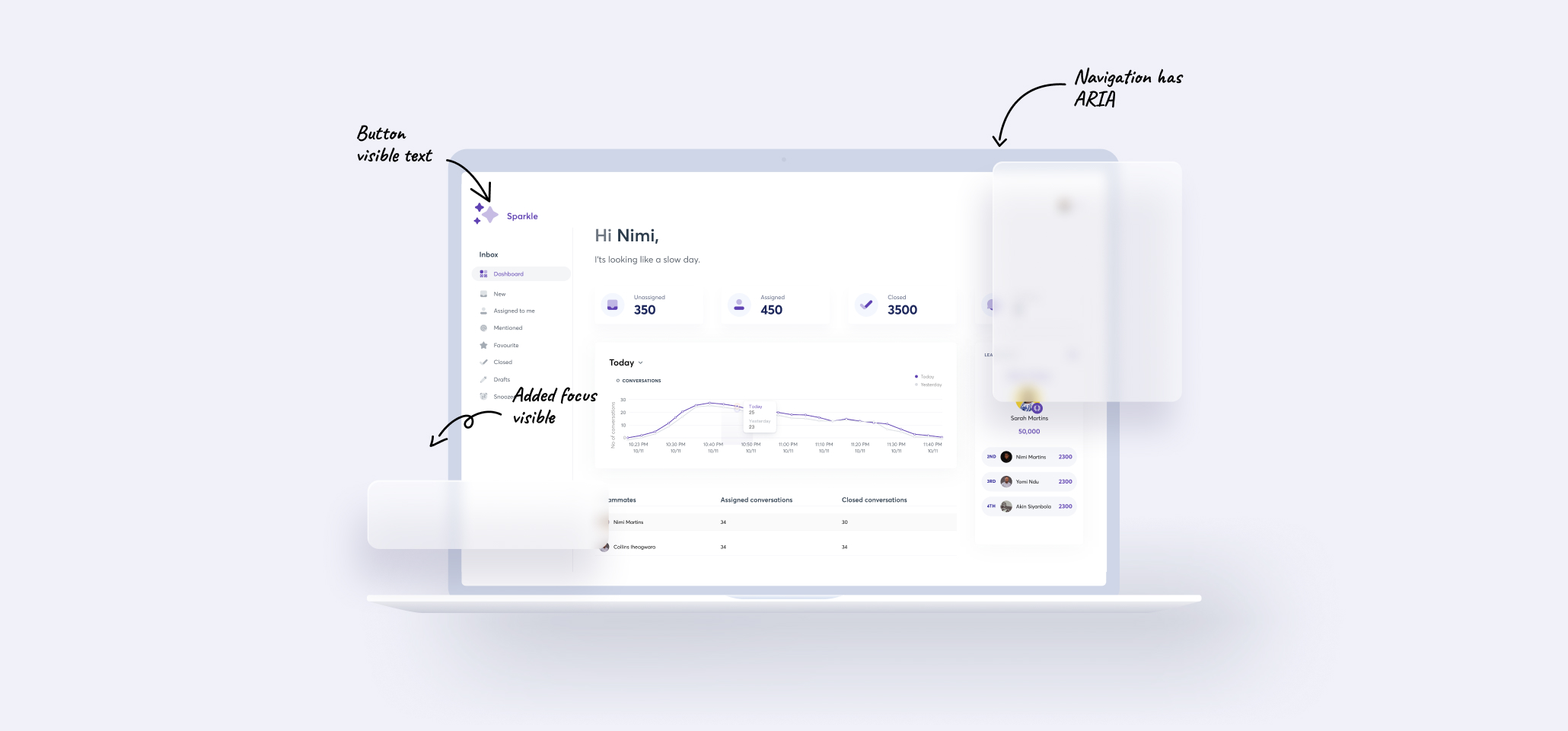
- HTML, CSS, and ARIA: direct code-level fixes for markup, styling, and accessible attributes
- WordPress and Webflow: platform-specific fixes within your existing build
- Documents (Word, Excel, PDF): the same hands-on fix, along with the findings and fixes list
- JavaScript-dependent fixes: coordinated through a trusted development partner when needed
Where you fit

Private sector under the EAA
Your product or service falls under the EAA, which has applied since 28 June 2025. Get a full audit, documentation of your conformity, and a path to fix what the evaluation finds.

Public sector, under the WAD
Your website or app belongs to a public sector body. Get a full audit, an accessibility statement in the WAD model format, and a path to fix what the evaluation finds.

Evaluating a vendor
Procuring software or a digital service? Get an ACR from the same manual evaluation.

Preparing for launch or redesign
Building or rebuilding a product? Get an evaluation report with prioritised recommendations, so you can fix issues before they reach your users.
Audit process

From kickoff to delivery: a minimum of 4 weeks.
Scoping calls
Evaluation and findings
Delivery
Review call and consultation
IAAP-certified specialists
Our specialists are certified by the International Association of Accessibility Professionals (IAAP) in WAS and CPACC, and were the first in Lithuania to hold both. WAS covers creating accessible web solutions, identifying issues, and fixing them. CPACC covers disabilities, assistive technologies, and the laws and standards behind accessibility.


EN 301 549-first methodology

Full-scope evaluation

Structured delivery

Fix guidance from practitioners
The standard and laws behind your audit
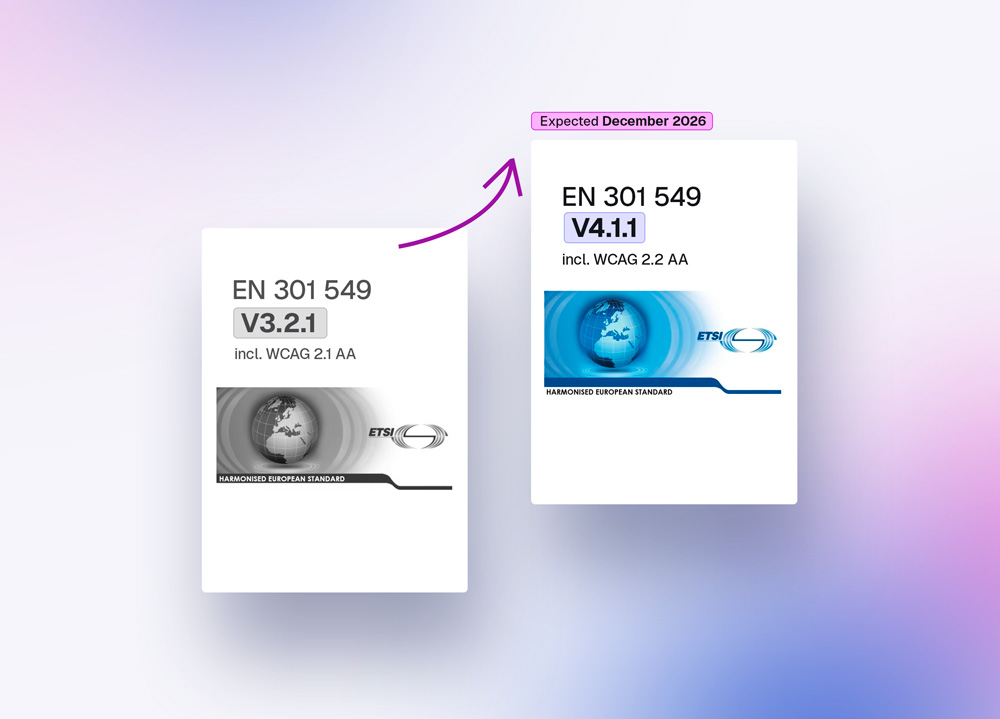
We evaluate against EN 301 549. WCAG is the web-content part of it. The WAD and the EAA decide who has to comply. In Lithuania, the WAD applies through Government Resolution Nr. 480 and the EAA through law XIV-1633. Whichever applies to you, it is mapped into one audit.

The European standard for ICT accessibility. Evaluating against a version cited in the Official Journal gives a presumption of conformity with the WAD and EAA requirements it covers.
The W3C web content guidelines. Incorporated into EN 301 549 as the basis for its web and software content requirements.
The Web Accessibility Directive (Directive (EU) 2016/2102). Governs public sector websites and apps, and mandates a model accessibility statement format.
The European Accessibility Act (Directive (EU) 2019/882). Governs the products and services it lists, such as e-commerce, banking, and transport services. Sets disclosure requirements that differ from the WAD, with no single mandated statement template.
Lithuania’s law transposing the EAA: Lietuvos Respublikos gaminių ir paslaugų prieinamumo reikalavimų įstatymas Nr. XIV-1633. It is the governing text for the Lithuanian market.
Lithuania’s government resolution applying the WAD to public sector websites and mobile apps: Lietuvos Respublikos Vyriausybės 2003 m. balandžio 18 d. nutarimas Nr. 480 „Dėl bendrųjų reikalavimų valstybės ir savivaldybių institucijų ir įstaigų interneto svetainėms ir mobiliosioms programoms aprašo patvirtinimo“ (as amended).
Other services
Axall ACP and consultancy

Accessibility compliance platform – Axall ACP
Built for:

Accessibility Consultancy
Built for:
Frequently asked questions
Answers to your questions about audits and remediation
Have more questions? Our team can help you out. Get in touch!
It applies if you provide in-scope services to consumers: e-commerce, consumer banking, passenger transport, e-books and dedicated software, electronic communications, or services giving access to audiovisual media. Member States apply the rules from 28 June 2025, and microenterprises providing services are exempt. Scope depends on your specific service and where you operate; get in touch if you’re unsure where you sit.
An audit is a one-time evaluation. Axall ACP keeps you compliant after it: status tracking and assignment per issue, a regulatory view per service category, and hosted reports that update as fixes are validated, so nothing is managed in spreadsheets across teams.
IAAP is the field's recognised credentialing body, and its certifications require passing a proctored exam. WAS covers creating accessible web solutions, identifying issues, and remediating them. CPACC covers disabilities and assistive technologies, accessibility and universal design, and standards, laws, and management strategies. Together, they mean our findings come from verified, examined expertise. We're the first in Lithuania to hold both.
Depends on scope, complexity, and whether you need full ACR documentation, but a minimum of 4 weeks. We scope every engagement individually — get in touch with your digital property details for a proposal.
Screen readers surface the same underlying structure — headings, roles, states, accessible names, landmarks — that other assistive technology depends on too. Voice control activates elements by their accessible name; switch access relies on focus order; braille displays read the same programmatic labels. When that structure is built correctly for a screen reader, it's built correctly for these other tools as well. That is why screen reader testing is our standard: it is the most sensitive method for catching the structural issues that affect all of them. Where a criterion depends on a different interaction pattern — like Label in Name for voice control — we verify that criterion directly, alongside the screen reader evaluation.
The legal requirements are set in the European Accessibility Act and, for public sector bodies, the Web Accessibility Directive. EN 301 549 is the European standard that supports them. Conforming to a harmonised standard whose reference is published in the Official Journal of the EU gives a presumption of conformity, within what the standard covers. WCAG is the basis of EN 301 549’s web content requirements, and EN 301 549 adds hardware, non-web software, documents and support services.
No. Neither the EAA nor the WAD requires an ACR. The EAA requires service providers to publish information on how each service meets the requirements, in their general terms and conditions or an equivalent document. The WAD requires public sector bodies to publish an accessibility statement. An ACR is a format procurement and legal teams recognise for that evidence.
If you operate in the Lithuanian market, XIV-1633, which implements the EAA, is the governing text. Scope and enforcement details are set nationally.
f you operate in the Lithuanian market, XIV-1633, which implements the EAA, is the governing text. Scope and enforcement details are set nationally.
Review your accessibility statement regularly. A full re-audit makes sense after a major redesign, platform change, or new feature launch.
Yes. Our quality seals confirm a platform was assessed by us and met the criteria evaluated, a verifiable record of the work and what it found. No official certifying body exists for WCAG or EN 301 549. The seal is Axall’s own, backed by the evaluation behind it.
Not sure what you need?
Tell us what you need to evaluate and where you are in the process, and we'll scope the right audit.