What the EU requires in an accessibility statement: WAD vs EAA
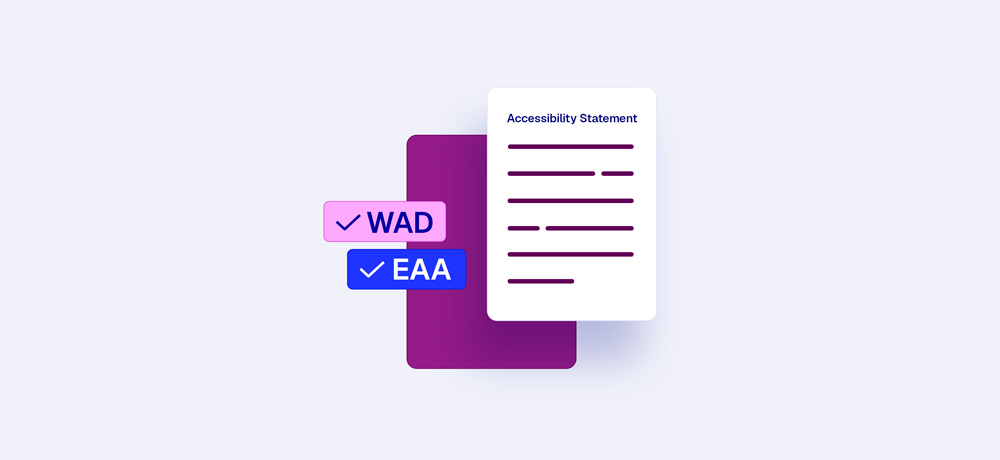
Only one of the two accessibility directives requires an "accessibility statement". The Web Accessibility Directive (WAD) requires one from public sector bodies. The European Accessibility Act (EAA) requires service providers to publish information on how their service meets the accessibility requirements, and does not use the term.
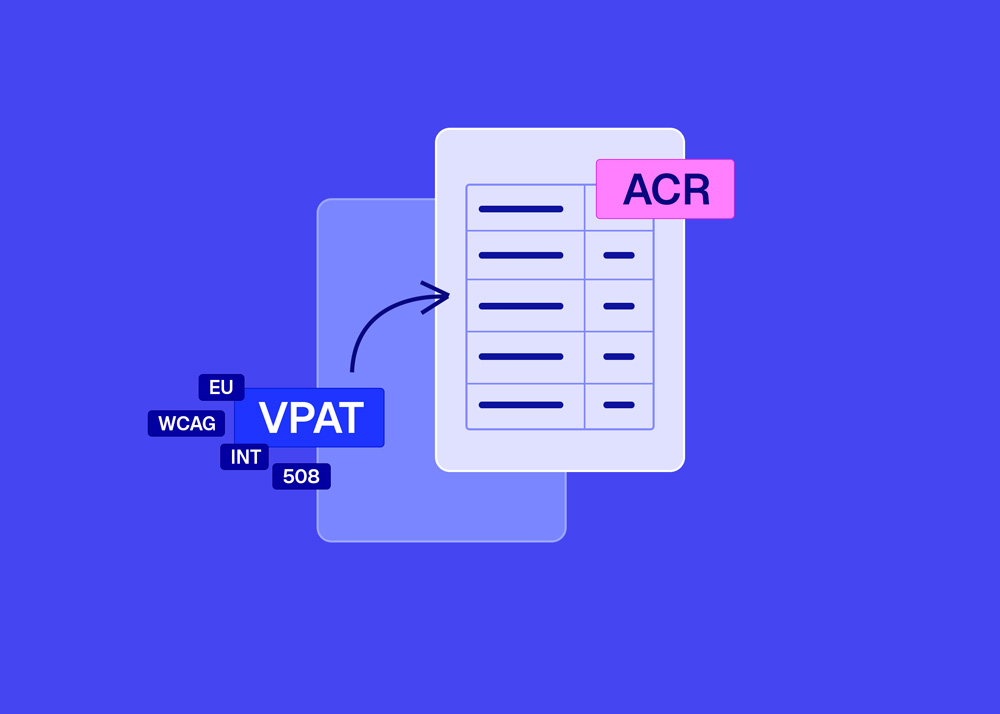
The two documents differ in content, format and legal basis. An Accessibility Conformance Report (ACR) is the evidence that supports either one.
WAD: the accessibility statement
Public sector bodies must provide and regularly update a detailed, comprehensive and clear statement on the compliance of their websites and mobile apps (Article 7(1)).
Required content:
- the parts of the content that are not accessible, the reasons, and the accessible alternatives where appropriate
- a description of, and a link to, a feedback mechanism, so that anyone can report a failure to comply and request information that is excluded from the requirements
- a link to the enforcement procedure, for an unsatisfactory response
Format:
- the Commission's model accessibility statement (Article 7(2)), in an accessible format
- for websites, published on the website
- for apps, on the body's website or alongside the other information shown when the app is downloaded
Response: public sector bodies must give an adequate response to a notification or request within a reasonable period (Article 7(1)).
In Lithuania
The statement is called atitikties paraiška dėl prieinamumo (Government Resolution Nr. 480, Aprašas, items 46-50):
- It follows the Commission model and is published in an accessible format (item 46).
- It is updated at least once a year, or after substantial content changes (item 47).
- A body relying on disproportionate burden lists the requirements it does not meet and the accessible alternatives (item 48).
- Feedback mechanism: answers within 10 working days (item 49). Accessible alternatives for excluded content: within 20 working days (item 50).
EAA: the accessibility information
Service providers must give information on how the service meets the applicable accessibility requirements, in the general terms and conditions or an equivalent document (Article 13(2), Annex V).
What the information covers:
- the applicable accessibility requirements
- where relevant to the assessment, the design and operation of the service
- how the service meets the requirements
- how the delivery process and its monitoring keep the service in conformity
How it must be provided (Article 13(2), as transposed by Lithuanian Law Nr. XIV-1633, Article 13(2)):
- made public
- provided in writing and orally on request, including in a form accessible to persons with disabilities
- kept for as long as the service is provided
Article 13(3) adds a duty to put procedures in place so that the service remains in conformity as it, the requirements and the standards change. The information describes that process. A single publication date does not satisfy it.
Using the WAD model for EAA information
The EAA does not prescribe a format for the information in Article 13(2). A service provider can therefore use the Commission's model accessibility statement as the structure for it. Axall recommends this to clients. The model is a familiar layout with fixed sections, and a private service that adopts it applies the same discipline the WAD sets for public sector bodies.
Before relying on it, check these points:
- Annex V content: the information must still cover the applicable requirements, the design and operation of the service where relevant, how the service meets the requirements, and how the delivery process and its monitoring keep it in conformity.
- Placement: Annex V places the information in the general terms and conditions or an equivalent document.
- WAD-specific parts: references to the WAD, its enforcement procedure (Article 9) and its disproportionate burden rules need replacing with the EAA's own provisions, such as the exceptions in Article 14, or removing.
- Feedback mechanism: Article 13(2) does not list one. Including it is a useful addition for the service's users.
The Accessibility Conformance Report (ACR) as evidence
An ACR documents conformance criterion by criterion, in a format procurement and legal teams recognise. For the WAD, its findings feed the statement's compliance section: what is accessible, what is not, and why. For the EAA, it supports the information on how the service meets the requirements. The directives leave the form of evidence open, and an ACR gives it a recognised structure.
If you are covered by both
A public body that also offers an EAA-listed service to consumers needs both: the WAD statement for its websites and apps, and the EAA information for the service.
What to do now
- Identify which law covers each of your digital properties.
- Check what you can show today: the WAD statement, the EAA information, or both.
- Public sector: check that the statement uses the Commission model, lists non-accessible content, and links to the feedback mechanism and enforcement procedure.
- Public sector in Lithuania: check the date of your last update. The Aprašas sets a maximum of one year.
- Service providers: check that the information sits in your general terms and conditions or an equivalent document, and is available in writing and orally on request.
- Service providers: consider the Commission's WAD model statement as the structure for that information, adapted to the EAA points above.
- Base both documents on an evaluation against EN 301 549 (the European standard for ICT accessibility) and keep the evidence.
- Not sure where you stand? See where you stand with our short compliance check.
Sourcing note: this post is based on Directive (EU) 2016/2102 (WAD), Article 7; Directive (EU) 2019/882 (EAA), Article 13 and Annex V; Lithuanian Law Nr. XIV-1633, Article 13; and Government Resolution Nr. 480 of 18 April 2003 (consolidated version in force from 1 March 2026), items 46-50. For anything binding, read the primary legal texts or ask a legal adviser. This post is not legal advice.
Accessibility compliance self-assessment
How compliant are you with EU accessibility law?
Assess your organisation in 3 minutes — then talk it through in a free 30-min consultation.
Subscribe to the AxAll newsletter
Once or twice a month: articles, event updates and practical resources on digital accessibility in Lithuania, the Baltics and the EU. Subscribe to the AxAll newsletter to stay informed.