EAA or WAD: which accessibility law applies to your organisation?

The Web Accessibility Directive (WAD) depends on who you are. The European Accessibility Act (EAA) depends on what you offer consumers. That one distinction answers most of the question.
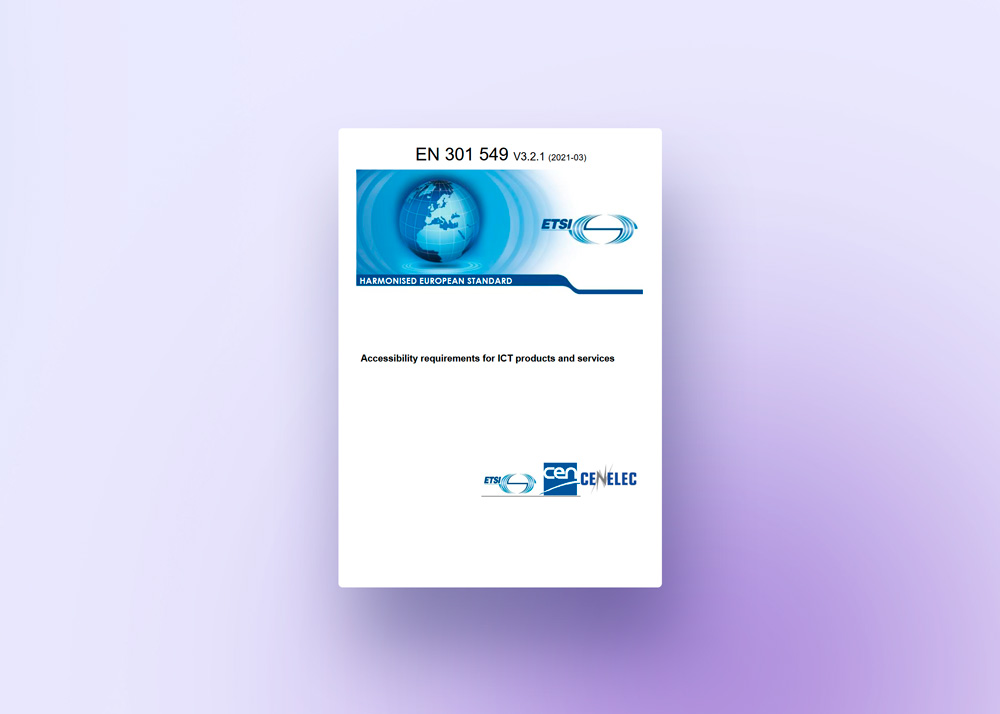
Both laws point to the same European standard, EN 301 549, and neither is satisfied by "passing WCAG" alone (why EN 301 549, not WCAG, is Europe's legal accessibility standard). The Web Content Accessibility Guidelines (WCAG) cover web content; EN 301 549 includes WCAG and goes further, into mobile apps, documents, software and more.
The short answer
- Public sector body? The WAD applies to your websites and mobile apps (WAD Article 1).
- Offering certain products or services to consumers? The EAA applies, from 28 June 2025 (EAA Article 31(2)).
- Both? A public sector body that also offers EAA-listed products or services to consumers should check both laws.
The two laws at a glance
WAD: Directive (EU) 2016/2102
- Covers: the websites and mobile apps of public sector bodies, on any device (Article 1(2)).
- Applies since: 23 September 2019 for websites published from 23 September 2018, 23 September 2020 for all other websites, and 23 June 2021 for mobile apps (Article 12(3)).
- You show: an accessibility statement for each website and app (Article 7(1)). See what the EU requires in an accessibility statement.
- In Lithuania: Government Resolution Nr. 480 of 18 April 2003 and its Aprašas. See the Lithuanian requirements for public sector websites and apps.
EAA: Directive (EU) 2019/882
- Covers: certain products and services provided to consumers (Article 2), such as e-commerce, consumer banking, e-books, electronic communications and passenger transport services. See the full scope, deadlines and obligations of the European Accessibility Act.
- Who carries the obligations: economic operators: manufacturers, authorised representatives, importers, distributors and service providers (Article 3(21)).
- Applies since: 28 June 2025 (Article 31(2)).
- Exempt: microenterprises providing services (Article 4(5)).
- You show: information on how your service meets the accessibility requirements (Article 13(2), Annex V).
- In Lithuania: Law on Accessibility Requirements for Products and Services Nr. XIV-1633.
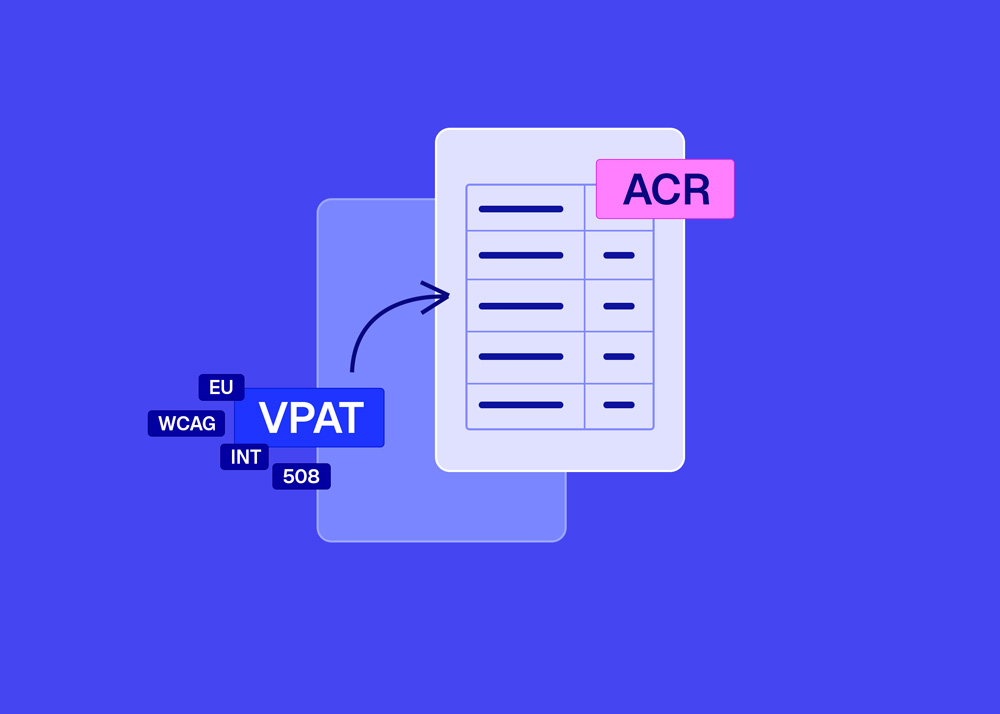
An Accessibility Conformance Report (ACR) is the evidence behind either document. It records conformance criterion by criterion, so the statement (WAD) or the service information (EAA) rests on documented findings that procurement and legal teams can review. The directives leave the form of evidence open, and an ACR gives it a recognised structure.
The common standard: EN 301 549
Under both laws, conforming to a harmonised standard cited in the Official Journal of the European Union (OJEU) gives a presumption of conformity (WAD Article 6(1); EAA Article 15(1)).
- WAD: EN 301 549 V3.2.1 is cited for the WAD (Commission Implementing Decision (EU) 2021/1339).
- EAA: EN 301 549 V4.1.1 was published on 2 September 2026 (what changes in version 4.1.1 and when it applies). Its OJEU citation is expected on 22 January 2027. That date is announced, not yet confirmed in the Official Journal.
Read next
- WAD: Guide to accessibility requirements for public sector websites and apps (Lithuanian requirements, Resolution Nr. 480).
- EAA: European Accessibility Act: scope, deadlines and what to do
- Accessibility statement: What the EU requires in an accessibility statement: WAD vs EAA
What to do now
- Check whether you are a public sector body, a provider of an EAA-listed product or service, or both.
- List your digital properties in scope: websites, apps, documents, terminals.
- Check what you can show today: an accessibility statement (WAD) or service accessibility information (EAA).
- Audit against EN 301 549, not WCAG alone.
- Not sure where you stand? See where you stand with our short compliance check.
Accessibility compliance self-assessment
How compliant are you with EU accessibility law?
Assess your organisation in 3 minutes — then talk it through in a free 30-min consultation.
Subscribe to the AxAll newsletter
Once or twice a month: articles, event updates and practical resources on digital accessibility in Lithuania, the Baltics and the EU. Subscribe to the AxAll newsletter to stay informed.