Naujoji EN 301 549 versija 4.1.1: kas keičiasi ir kada tai bus taikoma jūsų organizacijai
EN 301 549 – Europos darnusis standartas „Informacinių ir ryšių technologijų (IRT) prekių ir paslaugų prieinamumo reikalavimai“ (angl. Accessibility requirements for ICT (Information and Communications Technology) products and services) – atnaujinamas. Tačiau prieš kalbant apie pokyčius svarbu atminti: tai dar nėra teisės aktas.
Šis atnaujinimas svarbus todėl, kad EN 301 549 yra pagrindas dviem ES direktyvoms: ES prieinamumo direktyvai (Direktyva 2016/2102) (angl. Web Accessibility Directive, WAD (Directive 2016/2102)), taikomai viešojo sektoriaus svetainėms ir mobiliosioms programoms, ir Europos prieinamumo aktui (Direktyva 2019/882) (angl. European Accessibility Act (EAA) (Directive 2019/882)), taikomam privataus sektoriaus prekėms ir paslaugoms.
Kurią EN 301 549 versiją turite atitikti šiandien?
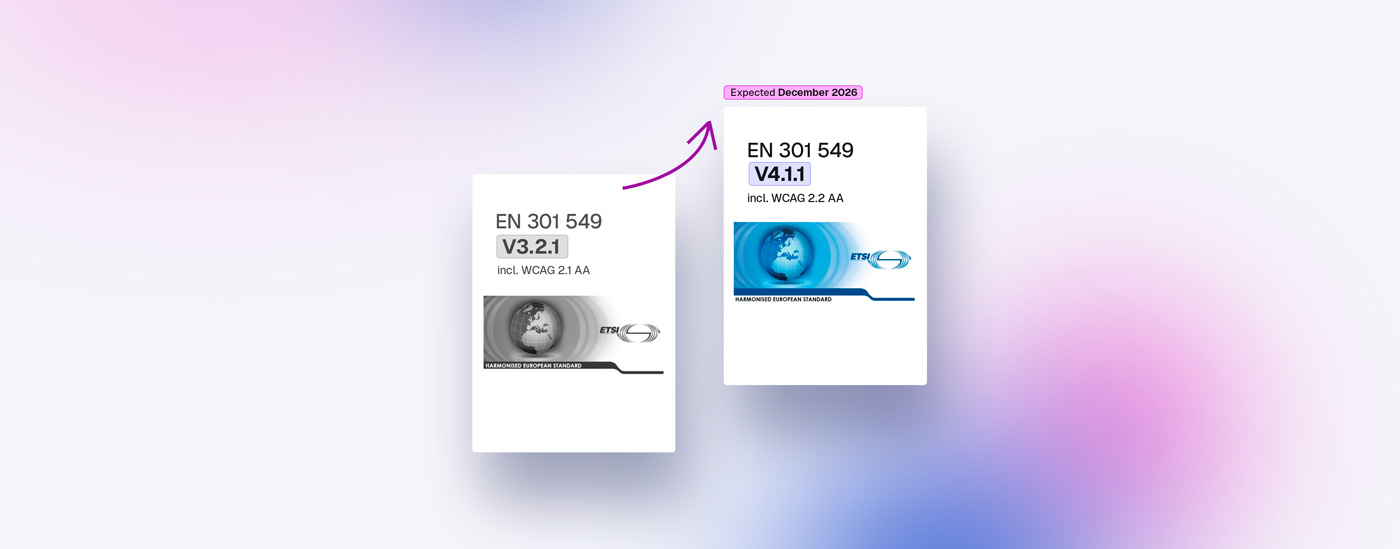
Šiuo metu teisiškai pripažįstama EN 301 549 V3.2.1 versija, paskelbta 2021 m. kovą ir pagrįsta Saityno turinio prieinamumo gairių 2.1 versijos AA lygiu (angl. Web Content Accessibility Guidelines (WCAG) 2.1 AA).
WCAG 2.2 buvo paskelbtas dar 2023 m. spalį, todėl skirtumas tarp dabartinės EN 301 549 versijos ir naujausios WCAG versijos jau egzistuoja. Šis skirtumas jau naikinamas: EN 301 549 V4.1.1 versiją ETSI paskelbė 2026 m. rugsėjo 2 d., ir ji pagrįsta WCAG 2.2 AA.
Tačiau jūsų teisiniai įsipareigojimai ir toliau siejami su šiuo metu oficialiai nurodyta standarto versija. Europos Komisija aiškiai nurodo, kad teisiniai įpareigojimai pasikeičia tik tada, kai nauja standarto versija oficialiai nurodoma (angl. cited) Europos Sąjungos (ES) oficialiajame leidinyje (OJEU). Vien naujos standarto ar WCAG versijos paskelbimo nepakanka. Šiuo metu oficialiai nurodyta EN 301 549 versija yra V3.2.1.
Kas pasikeitė: paskelbta V4.1.1 versija
Naujoji standarto redakcija jau yra pažengusi standartizavimo procese:
- 2025 m. lapkritis – paskelbtas V4.1.0 projektas viešai peržiūrai
- 2026 m. birželis – V4.1.0 pasiekė galutinio projekto etapą
- 2026 m. rugsėjo 2 d. – galutinę versiją, dabar oficialiai vadinamą V4.1.1, paskelbė ETSI, CEN ir CENELEC
- 2026 m. gruodžio 16 d. (numatyta pagal ETSI darbo programą) – numatomas V4.1.1 nurodymas Oficialiajame leidinyje, pakeičiant V3.2.1 kaip teisiškai pripažįstamą standartą.
Gruodžio data yra numatomas etapas, o ne garantuotas terminas. Šiame standartizavimo etape terminai gali keistis – prieš oficialų nurodymą dar reikalingas dokumento perdavimas Europos Komisijai ir oficialus paskelbimas Oficialiajame leidinyje. Iki oficialaus nurodymo V4.1.1 tebėra paskelbtas, bet dar ne teisiškai pripažintas standartas – jam verta ruoštis, tačiau šiandien pagal jį nereikėtų vertinti atitikties.
Kas iš tikrųjų keičiasi?
Saityno turiniui, e.dokumentams ir programinei įrangai – WCAG 2.2 AA
Kaip jau minėta, saityno turinio reikalavimai pereina nuo WCAG 2.1 prie WCAG 2.2. 9, 10 ir 11 skyriai, apimantys saityną, elektroninius dokumentus ir programinę įrangą, kaip pagrindą naudos WCAG 2.2 AA. Tai reiškia naujus sėkmės kriterijus, kurių dabartinėje standarto versijoje nėra, pavyzdžiui, susijusius su paspaudžiamų elementų dydžiu (angl. target size) ir prieinama autentifikacija (angl. accessible authentication).
Tačiau tai nereiškia, kad EN 301 549 tampa lygiavertis WCAG. Net ir įtraukus WCAG 2.2, standarte išlieka dešimtys EN 301 549 specifinių reikalavimų, kurių WCAG apskritai neapima – skaitykite mūsų apžvalgą apie EN 301 549 reikalavimus, kurie viršija WCAG 2.1 taikymo sritį.
6 skyrius iš esmės perrašomas
Vietoj „Dvikrypčio balso ryšio“ (angl. Two-way Voice Communication) jis apims platesnę sąvoką – „Dvikryptę komunikaciją realiuoju laiku“ (angl. Real-Time Bidirectional Communication) – ir oficialiai įtrauks „Visapusišką komunikaciją“ (angl. Total Conversation), apimančią balso, realaus laiko tekstinio ryšio (RTT) ir vaizdo integraciją. Taip pat reikšmingai keičiami ir plečiami RTT reikalavimai.
Du nauji priedai tiesiogiai susieja standartą su EAA
ZA ir ZB prieduose EN 301 549 techniniai reikalavimai aiškiai susiejami su EAA teisiniais straipsniais. ZA priedas taip pat atnaujina ankstesnį A priedą, susijusį su WAD. Taip pat įtraukiamas naujas A.2 skyrius, skirtas EAA taikymo sričiai priklausančioms prekėms ir paslaugoms vertinti pagal atitikties reikalavimus. Tai padedės išspręsti dabartinės V3.2.1 versijos struktūrinį trūkumą, susijusį su EAA.
Struktūriniai pakeitimai
Techninės įrangos, dokumentacijos ir pagalbos paslaugų reikalavimai pertvarkomi siekiant pagerinti aiškumą, tačiau jų turinys iš esmės nesikeičia.
Kodėl svarbus EAA susiejimas?
Daugeliui organizacijų tai bus vienas reikšmingiausių pokyčių. Dabartinė EN 301 549 V3.2.1 versija buvo parengta prieš priimant EAA ir nėra oficialiai su juo susieta. Ji tebėra svarbus techninis pagrindas EAA reikalavimams įgyvendinti, tačiau šiuo metu nesuteikia formalios atitikties prezumpcijos pagal EAA.
Nauji V4.1.1 priedai skirti būtent šiam trūkumui pašalinti. Kai V4.1.1 bus nurodyta Oficialiajame leidinyje, EN 301 549 atitiktis bus tiesiogiai susieta su EAA reikalavimais, o ne tik su WAD.
Ką daryti dabar?
- Dar neatlikote vertinimo pagal EN 301 549? Vertinkite pagal V3.2.1 – tai šiuo metu Oficialiajame leidinyje nurodyta versija, turinti teisinę reikšmę. Nelaukite V4.1.1.
- Jau atlikote vertinimą pagal V3.2.1? Pradėkite planuoti skirtumo tarp V3.2.1 ir V4.1.1 vertinimą – ypač naujų WCAG 2.2 AA kriterijų bei išplėstų 6 skyriaus reikalavimų, susijusių su tekstu realiuoju laiku ir visapusiška komunikacija (angl. Total Conversation). Taip galėsite greitai pašalinti trūkumus, kai V4.1.1 bus oficialiai nurodyta, užuot pradėję viską „nuo nulio“.
- Nelaikykite V4.1.1 šiandien teisiškai privalomu standartu. Jis jau paskelbtas, tačiau dar nenurodytas Oficialiajame leidinyje – ir teisinės galios neįgis, kol tai neįvyks.
- Stebėkite oficialaus nurodymo datą, bet nelaikykite jos galutiniu terminu. Pagal dabartinį ETSI planą orientacinė data yra 2026 m. gruodžio 16 d. Vertinkite ją kaip planuojamą etapą, o ne fiksuotą terminą, ir prieš darydami išvadas patikrinkite, ar standartas jau įgijo teisinę galią.
Privalomus teisinius reikalavimus visada tikrinkite pagal aktualų WAD, EAA ir tuo metu Europos Sąjungos oficialiajame leidinyje nurodytą EN 301 549 versiją.
„AxAll“ padeda organizacijoms užtikrinti atitiktį ES prieinamumo reikalavimams – atliekame EN 301 549 auditus, konsultuojame.
Užsiregistruokite pokalbiui, kad pradėtumėte užtikrinti savo skaitmeninių produktų atitiktį ir prieinamumą žmonėms su negalia.
Naujienlaiškio prenumerata
Dukart per mėnesį siunčiame įžvalgas, renginių naujienas ir vertingus informacinius išteklius apie geriausią prieinamumo praktiką Lietuvoje, Baltijos šalyse ir ES rinkoje. Kviečiame užsiregistruoti