EAA or WAD: which accessibility law applies to your organisation?

The Web Accessibility Directive (WAD) depends on who you are. The European Accessibility Act (EAA) depends on what you offer consumers. That one distinction answers most of the question.
Both laws point to the same European standard, EN 301 549, and neither is satisfied by "passing WCAG" alone. The Web Content Accessibility Guidelines (WCAG) cover web content; EN 301 549 includes WCAG and goes further, into mobile apps, documents, software and more.
The short answer
- Public sector body? The WAD applies to your websites and mobile apps (WAD Article 1).
- Private company offering certain products or services to consumers? The EAA applies, from 28 June 2025 (EAA Article 31(2)).
If you are unsure which side you fall on, start with the scope lists below.
Who the WAD covers
The WAD covers the websites and mobile apps of public sector bodies, on any device (Article 1(2)). It has applied in stages (Article 12(3)):
- websites published from 23 September 2018: from 23 September 2019
- all other websites: from 23 September 2020
- mobile apps: from 23 June 2021
Out of scope: public service broadcasters, and non-governmental organisations (NGOs) that do not provide services essential to the public or aimed at persons with disabilities (Article 1(3)). Member States may also exclude schools, kindergartens and nurseries, except their essential online administrative functions (Article 1(5)).
Some content is excluded too, for example office files published before 23 September 2018 that are not needed for active administrative processes, and live time-based media (Article 1(4)).
Who the EAA covers
The EAA covers products and services provided to consumers (Article 2).
Services (Article 2(2)):
- electronic communications services
- services providing access to audiovisual media services
- elements of air, bus, rail and waterborne passenger transport: websites, mobile apps, e-tickets, travel information and interactive self-service terminals (urban, suburban and regional transport: terminals only)
- consumer banking services
- e-books and dedicated software
- e-commerce services
Products (Article 2(1)) include consumer computers and their operating systems, payment terminals, automated teller machines (ATMs), ticketing and check-in machines, interactive information terminals, consumer devices used for electronic communications or audiovisual media, and e-readers.
Who is exempt: microenterprises providing services (Article 4(5)).
Transition: service contracts agreed before 28 June 2025 may continue unchanged until they expire, for no longer than 5 years from that date (Article 32(1)).
What each law asks you to show
- WAD: a detailed, up-to-date accessibility statement for each website and app, including non-accessible content, a feedback mechanism and a link to the enforcement procedure (Article 7(1)).
- EAA: information on how your service meets the accessibility requirements, made public and kept for as long as the service operates (Article 13(2), Annex V), plus procedures that keep the service in conformity as it, the requirements and the standards change (Article 13(3)).
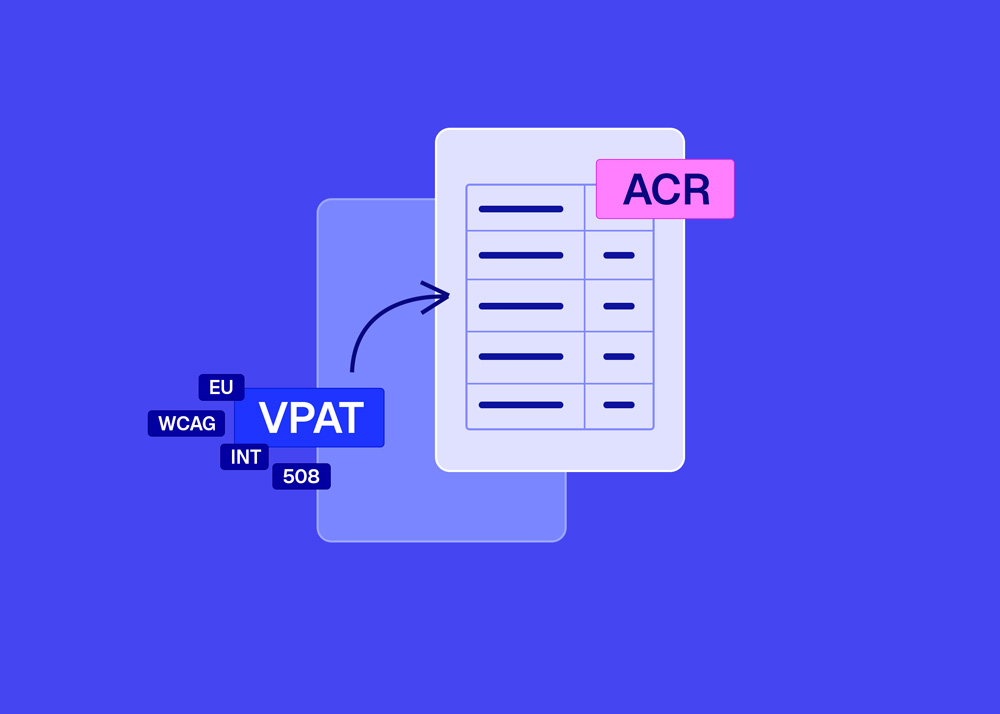
Neither law requires an Accessibility Conformance Report (ACR). An ACR is still a useful way to document conformance, but it is not a legal obligation under either directive.
The common standard: EN 301 549
Under both laws, conforming to a harmonised standard cited in the Official Journal of the European Union (OJEU) gives a presumption of conformity (WAD Article 6(1); EAA Article 15(1)).
- WAD: EN 301 549 V3.2.1 is cited for the WAD (Commission Implementing Decision (EU) 2021/1339).
- EAA: EN 301 549 V4.1.1 was published on 2 September 2026. Its OJEU citation is expected on 22 January 2027. That date is announced, not yet confirmed in the Official Journal.
EN 301 549 is a voluntary means of showing conformity, but it is the one that carries the legal presumption once cited.
In Lithuania
- The EAA is transposed by the Law on Accessibility Requirements for Products and Services (No. XIV-1633) (Lietuvos Respublikos gaminių ir paslaugų prieinamumo reikalavimų įstatymas). Microenterprises providing services are exempt (Article 7(1)), and service providers must notify the market surveillance authority within 5 working days of a non-conformity (Article 13(5)). Fines start at EUR 500 (Article 23).
- The WAD is implemented through Government Resolution Nr. 480 of 18 April 2003, Dėl bendrųjų reikalavimų valstybės ir savivaldybių institucijų ir įstaigų interneto svetainėms ir mobiliosioms programoms aprašo patvirtinimo. Its annexed description (Aprašas) was approved by Government Resolution Nr. 1261 of 12 December 2018 and is currently in the version in force from 1 March 2026 (Nr. 918 of 17 December 2025). The State Digital Solutions Agency (VSSA) performs the functions of the authorised institution, including monitoring. Read the full Lithuanian WAD guide.
What to do now
- Check whether you are a public sector body, a provider of an EAA-listed service or product, or both.
- List your digital properties in scope: websites, apps, documents, terminals.
- Check what you can show today: an accessibility statement (WAD) or service accessibility information (EAA).
- Audit against EN 301 549, not WCAG alone.
- Not sure where you stand? See where you stand with our short compliance check.
Sourcing note: this post is based on Directive (EU) 2016/2102 (WAD), Directive (EU) 2019/882 (EAA), Commission Implementing Decision (EU) 2021/1339 the Lithuanian Law No. XIV-1633 (consolidated version of 30 June 2026) and Government Resolution Nr. 1261 of 15 December 2018 amending Resolution Nr. 480 of 2003 (as described by VSSA). The OJEU citation date for EN 301 549 V4.1.1 is expected, not confirmed. For anything binding, read the primary legal texts or ask a legal adviser. This post is not legal advice.
Prieinamumo atitikties įsivertinimas
Ar atitinkate ES prieinamumo reikalavimus?
Įsivertinkite savo organizacijos atitiktį vos per 3 minutes ir gaukite nemokamą konsultaciją.
Prenumeruokite AxAll naujienlaiškį
Vieną ar dukart per mėnesį siunčiame įžvalgas, renginių naujienas ir vertingus informacinius išteklius apie geriausią prieinamumo praktiką Lietuvoje, Baltijos šalyse ir ES. Kviečiame prenumeruoti.